
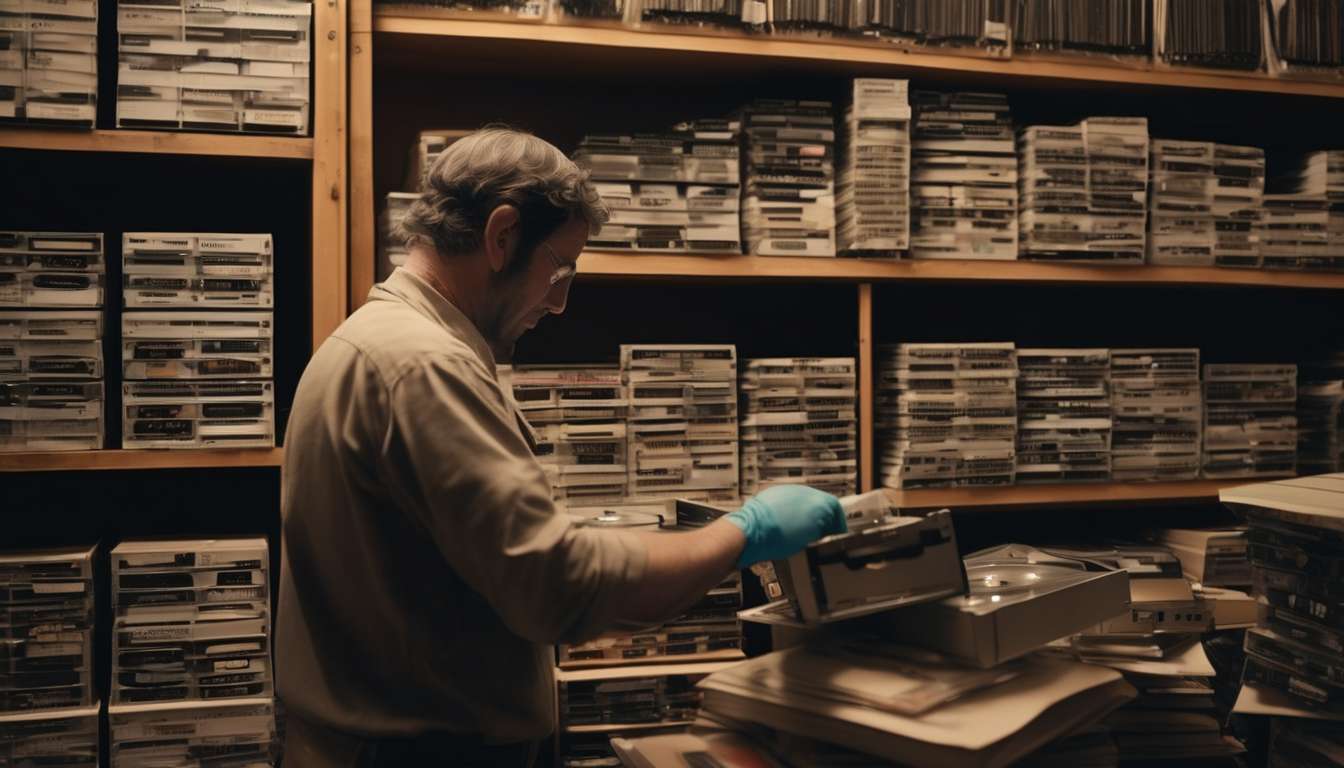
Cultural archives preserving adult industry media history
Keeping pace with a digital renaissance, recent debates over platform moderation, archive funding, and cultural heritage have thrust adult industry media into the spotlight.
As streaming services consolidate and major hosting sites revise content policies, entire swaths of erotic photography, film, and fan-produced material risk disappearing or becoming inaccessible to researchers, performers, and the public.
High-profile takedowns, growing academic interest, and grassroots preservation projects intersect to reshape whose stories are kept and how.
Preserving adult industry media is not merely about saving risqué artifacts but about documenting:
- labor histories
- consent practices
- aesthetic innovation
- marginalized communities’ self-representation
By examining current policy shifts and emergent archival practices, we reveal both the urgency and the opportunities present:
- Collaborative digitization initiatives
- Ethical metadata standards
- Legal strategies that can secure permanency without exploiting creators
Together, we can build archives that honor complexity and foreground rights, context, and dignity.
Historical Scope
We will trace how adult-industry media have been produced, distributed, and archived from early print and film through the digital era.
We map a lineage that honors creators, performers, and audiences who found community and expression across formats.
Transitions in media and distribution:
- Small press pamphlets and stag films gave way to magazines, VHS, and commercial cinema.
- Those formats were then overtaken by internet platforms and ephemeral streaming.
- Each shift changed who controlled access, how materials circulated, and what was preserved.
Archival preservation has been uneven but persistent.
- Libraries, private collectors, and some institutions recognized cultural value and intervened.
- Preservation efforts varied by resources, legal constraints, and institutional priorities.
Rights management must be confronted pragmatically.
- Seek models that respect creators’ control while enabling scholarly access and public memory.
- Balance legal clearance, consent, and fair-use or licensing mechanisms to support research and access.
Community-led collections play a crucial role.
- They rescue materials that might otherwise be lost.
- They contextualize artifacts and keep oral histories alive.
- They often adopt more flexible, care-centered approaches than traditional institutions.
Archival principles for inclusive stewardship:
- Center mutual care and shared responsibility.
- Create transparent policies that prioritize consent and contextualization.
- Design access models that reflect diverse experiences and avoid erasure.
Our scope emphasizes continuity and change.
- Show how stewardship decisions have shaped what survives.
- Reveal who can claim belonging in this cultural record based on those decisions.
At-Risk Collections
Many vital collections remain at risk from neglect, legal pressure, obsolescence, and outright destruction unless we act to document, stabilize, and secure them.
We face fragile physical media, scattered personal archives, and materials hidden because of stigma or uncertain rights status.
To protect these holdings, we prioritize archival preservation practices that address:
- environmental control,
- digitization,
- reliable metadata
so items remain accessible to our community.
We also confront complex rights-management questions—who can grant access, how consent is recorded, and how restrictions evolve.
By sharing expertise and tools, we build consistent approaches that respect creators and subjects while keeping history open.
Community-led collections are central. When collectors, performers, scholars, and fans work together, we:
- create trust,
- pool resources,
- reduce duplication,
- rescue orphaned materials,
- ensure representation across voices and eras
If we act now with clarity and shared purpose, we’ll keep these cultural records intact, accountable, and connected to the people they represent.
Ethical Frameworks
We will establish clear ethical principles that balance respect for creators and subjects, legal obligations, and the community’s right to access and study adult industry media.
We will outline safeguards for archival preservation that honor consent, privacy, and dignity while ensuring materials remain available for research and cultural memory.
We will adopt transparent rights-management policies that make provenance, licensing, and takedown procedures explicit so contributors and users know what’s permitted.
We will prioritize minimizing harm.
- Restrict sensitive content access.
- Anonymize where appropriate.
- Document ethical decisions with accountability.
We will embed equitable practices so community-led collections and marginalized creators see their work described and preserved accurately, not erased.
We will commit to regular policy review as laws, technologies, and community norms evolve, and provide clear complaint and appeal mechanisms.
Together we will create an ethical foundation that supports stewardship, trust, and shared responsibility, so the archive can serve as a respectful, reliable resource for study, remembrance, and cultural affirmation.
Community Collaboration
We will actively partner with creators, performers, researchers, and advocacy groups to co-design collecting practices, access policies, and interpretive materials that reflect lived experience and community priorities.
We build spaces where people feel seen and heard, inviting contributors to shape what gets preserved and how.
Our community-led collections center consent, context, and cultural meaning, so materials aren’t just archived but cared for in ways that honor originators.
We commit to transparent archival preservation strategies that balance longevity with dignity.
We document provenance, usage terms, and care decisions in ways community members can review and amend.
We integrate participatory rights management, giving contributors clear controls over access, attribution, and future use while supporting researchers’ needs.
We establish advisory councils, regular feedback loops, and shared governance models to ensure stewardship reflects our collective values.
Together we will sustain a living archive that preserves history responsibly and fosters belonging, trust, and mutual respect across creators, caretakers, and audiences.
Technical Preservation
We will implement robust, standards-based technical preservation practices to ensure media integrity, accessibility, and long-term discoverability.
We will prioritize archival preservation workflows that use open formats, checksums, and documented metadata schemas so every item remains usable and traceable.
- Open formats (e.g., non-proprietary, well-documented file types)
- Checksums (to detect bit rot and verify integrity over time)
- Documented metadata schemas (to preserve provenance, context, and technical details)
We will store multiple redundant copies across geographically dispersed systems and run routine integrity checks so our shared history stays intact for everyone.
- Multiple redundant copies (distributed backups and replicas)
- Geographic dispersion (to reduce risk from regional failures)
- Routine integrity checks (automated checksum verification and repair workflows)
We will integrate clear rights-management metadata to respect creators and participants while supporting research and community reuse; access controls will be transparent and community-informed.
- Rights-management metadata (clear licensing, consent, and restrictions)
- Transparent access controls (documented policies and community input)
- Support for research and reuse (balancing access with ethical considerations)
We will adopt interoperable cataloging practices that let community-led collections plug into larger discovery networks, making resources findable without forcing centralized control.
- Interoperability (use of shared standards and APIs)
- Decentralized participation (collections can join discovery networks while retaining autonomy)
- Findability (metadata and protocols that support discovery across systems)
We will provide tools and training so contributors can prepare materials to preservation standards, strengthening trust and shared responsibility.
- Contributor tools (templates, validation tools, and ingestion utilities)
- Training and documentation (workshops, guides, and support resources)
- Community responsibility (clear roles and expectations for contributors)
We will continuously review technical strategies as formats and community needs evolve, and we will document decisions openly so our archive remains a resilient, welcoming steward of adult industry media history.
- Regular review cycles (periodic evaluation of formats, workflows, and policies)
- Open documentation (public records of decisions, policies, and technical choices)
- Resilience and stewardship (commitment to long-term care and inclusivity)
Legal Protections
We will establish clear legal frameworks and policies that protect contributors, participants, and researchers while enabling responsible access and reuse of adult industry materials.
We will center consent, privacy, and dignity in every archival preservation action.
- Create plain-language agreements and consent records that contributors can understand and trust.
- Ensure consent documentation is retained with provenance and access controls.
We will implement robust rights management practices so creators retain control where appropriate, and so users understand permitted uses without guesswork.
- Record licensing terms and permitted uses in catalog records.
- Provide clear licensing options and researcher protocols.
We will support community-led collections by co-designing policies with stakeholders, ensuring marginal voices shape retention, access, and takedown procedures.
- Engage contributors, performers, scholars, and community advocates in policy design.
- Offer mediation paths when disputes arise to protect participants and researchers.
We will balance legal compliance (copyright, privacy, and obscenity laws) with ethical obligations.
- Document provenance and any legal or ethical restrictions in catalog metadata.
- Regularly review and update policies to reflect changing law and community values.
We will publish transparent statements that demonstrate accountability and foster trust across contributors, scholars, and archivists.
- Make policy statements and review timelines publicly available.
- Solicit and incorporate ongoing community input into policy revisions.
Funding Models
Funding approach: diverse, sustainable, and not dependent on a single source.
- We’ll combine grants, membership, sliding-scale fees, and partner-supported initiatives so funding isn’t tied to a single source.
- We’ll reserve seed funds to support community‑led collections, enabling grassroots groups to document their own histories without gatekeeping.
Protecting donor intent and preventing misuse.
- We’ll establish ethical donor agreements that prevent misuse or commercialization against contributors’ wishes while allowing reasonable scholarly access.
- We’ll prioritize transparency in budgets and reporting so contributors feel respected and included.
Ethical stewardship, preservation, and access.
- We’ll allocate resources to archival preservation standards, digitization, secure storage, and staff training in rights management to honor creators and subjects.
- We’ll seek collaborations with cultural institutions and allied nonprofits to share infrastructure costs and expand stewardship.
Community-centered governance and accountability.
- We’ll create a community advisory board with decision-making power so funding decisions reflect lived experience.
- We’ll monitor impact and adjust models proactively, ensuring financial resilience that sustains preservation, trust, and belonging for the communities we serve.
Access and Use Policies
Policy goal: balance open research and cultural access with privacy, consent, and safety.
We’ll define clear, accessible policies that balance open research and cultural access with privacy, consent, and the safety of creators and subjects.
We’ll center archival preservation practices that honor creators’ dignity, embedding rights management protocols that are transparent and easy to navigate.
We’ll set tiered access levels so scholars, community members, and the public can find appropriate pathways for engagement without exposing vulnerable subjects.
Co-creation with contributors and communities.
We’ll collaborate with contributors and community-led collections to co-create consent language, reuse permissions, and takedown procedures.
We’ll document provenance, restrict sensitive metadata when needed, and provide clear citation and licensing guidance.
Training, transparency, and participation.
We’ll train staff and volunteers in ethical review and response, and we’ll publish notices explaining how decisions are made so everyone feels included in stewardship.
Dispute resolution and trust-building.
We’ll ensure dispute and appeal mechanisms are simple, timely, and fair.
By combining rigorous archival preservation with participatory rights management, we’ll build a trustworthy, belonging-oriented archive that supports research while protecting people whose histories we preserve.
What specific criteria do archivists use to determine whether a particular adult industry work is culturally or historically significant enough to include in a public collection?
We’re asking which criteria archivists use to judge a work’s cultural or historical significance.
Key assessment dimensions:
- Uniqueness — Does the work contain content or perspectives not found elsewhere?
- Representativeness — Does it exemplify a period, movement, community, or practice?
- Influence — Has it affected social attitudes, policy, or industry practice?
Supporting evaluation factors:
- Provenance — Is the work’s origin, chain of custody, and contextual history well documented?
- Creator reputation — Does the creator’s standing contribute to the work’s significance?
- Rarity — How scarce are copies or comparable items?
- Legal and ethical considerations — Are there copyright, privacy, or sensitivity issues that affect acquisition or access?
- Research value — Will scholars, students, or the public benefit from access to the work?
Community and collection fit:
- Community interest — Does the relevant community value or request preservation of the work?
- Gap filling — Does the work fill documented gaps in existing collections or narratives?
Practical considerations before accessioning:
- Condition assessment — What is the physical or digital condition and what conservation is required?
- Access needs — What restrictions, formats, or infrastructure are needed to provide appropriate access?
Decision outcome:
Archivists weigh these criteria together—significance, fit, legal/ethical constraints, and practical feasibility—to decide whether to include the work in the archive.
How do institutions handle requests from creators or performers to have their images, names, or works removed from archived collections after initial accession?
We recognize requests to remove images, names, or works and balance them with our obligation to preserve records.
We evaluate legal rights, consent, privacy, and donor agreements, and consult ethics policies.
When justified, we consider redaction, restricted access, or deaccessioning.
We communicate transparently with requesters and document decisions.
When outright removal would harm the collection’s integrity or the public interest, we may offer alternatives such as:
- Access restrictions
- Anonymization
- Other mitigations (e.g., contextual notes)
Our approach seeks to balance individual concerns with the institution’s duty to preserve and provide access to records.
Are there examples of museums or archives that have successfully partnered with the adult industry to develop exhibitions or public programming, and what unique challenges did those collaborations present?
We’ve seen museums and archives partner with adult industry creators to mount exhibitions and programs, like university galleries collaborating with sex-positive collectives or LGBTQ+ museums showcasing erotic art.
We’ve welcomed performers as curators and speakers, and we’ve navigated consent, legal, and reputational concerns together.
We’ve made space for respectful interpretation, harm-minimizing outreach, and clear access policies so communities feel included and safe while complex histories are honestly presented.
Conclusion
You’ve seen how cultural archives safeguard adult industry media across history, protect at-risk collections, and build ethical, community-centered practices.
You’ll need technical preservation, legal protections, and sustainable funding to keep materials accessible and respected.
By crafting clear access and use policies, collaborating with creators and communities, and advocating for rights and resources, you’ll help ensure these records survive responsibly—honoring lived experiences, supporting research, and challenging stigma for future generations.
